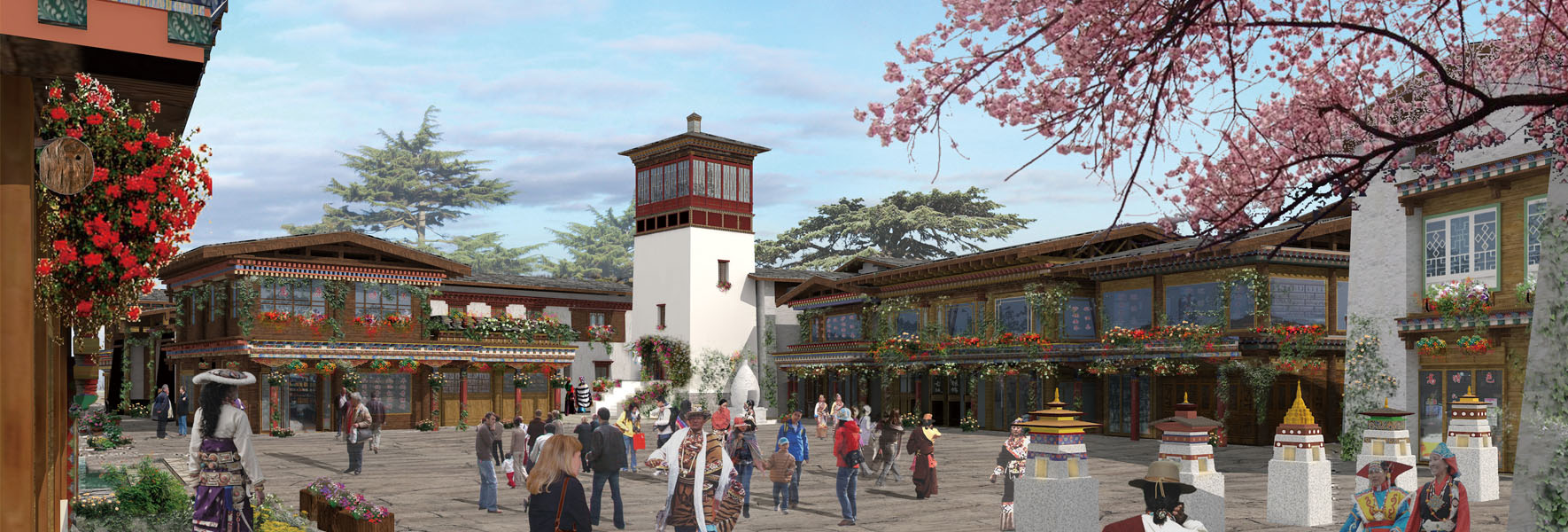
Lulang international tourism town officially started construction
Loading...
 2012-03-29
Yesterday, Linzhi Lulang international tourism town was officially launched and laid the foundation in Lulang Town, Linzhi County, Linzhi Prefecture, Tibet Autonomous Region. Zhu Xiaodan, deputy secretary of the provincial Party committee and governor, and Bai machilin, deputy secretary and chairman of the Party committee of the Tibet Autonomous Region, attended the project commencement ceremony. At the previous day's Symposium on counterpart assistance to Tibet between Guangdong and Tibet, Chen Quanguo, Secretary of the Party committee of the Tibet Autonomous Region, had in-depth exchanges with Zhu Xiaodan on the construction of Lulang international tourism town project and reached a consensus to work together to build a world-class international tourism town.
So far, Lulang scenic spot, a small town known as "Oriental Switzerland", has once again become the focus due to the new positioning of "international tourism town".
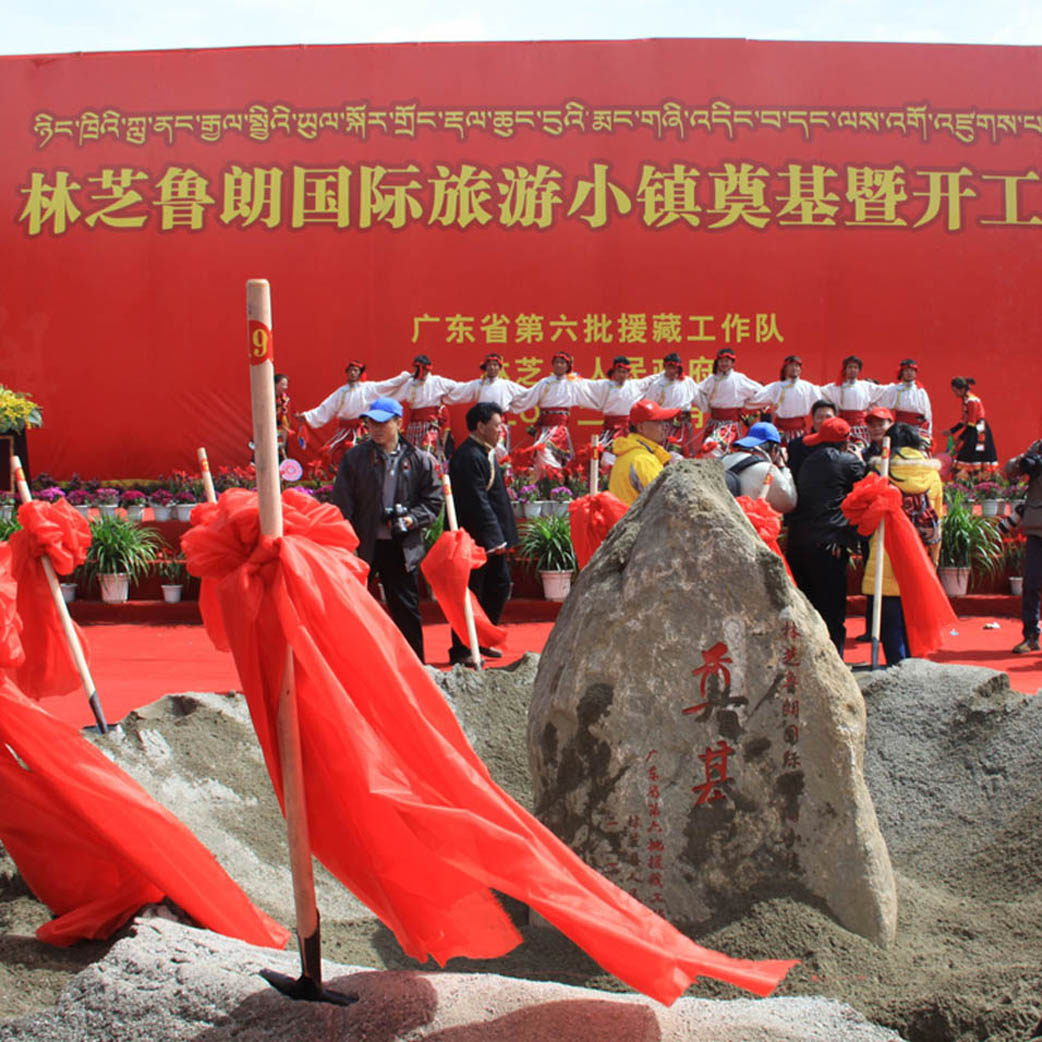
After the Sixth Batch of Guangdong Tibet assistance task force entered Tibet, Guangdong Province and Nyingchi region jointly listed the construction project of "Nyingchi Lulang international tourism town" as a key Tibet assistance project in 2011, and proposed to build an international tourism town highlighting Tibetan culture, natural ecology, holiness, tranquility and modern fashion.
Li Yalin, leader of the Sixth Batch of Tibet assistance task force, introduced that the total investment of Lulang international tourism town project during the 12th Five Year Plan period will reach 115 million yuan. The reporter noted that the Guangdong delegation to Tibet was accompanied by the heads of Guangdong China Travel Group, China Poly Group, Evergrande real estate group and Guangdong Pearl River Investment Co., Ltd.
Decode Lulang
What is a world-class tourist town like? The reporter interviewed Chen Keshi, head of Lulang's design team and professor of China Urban Design Research Center of Peking University.
Nanfang Daily: what kind of town can be called "international tourism town"?
Chen Keshi: after World War II, Europe began to build the town into an international tourism town, recognized by Provence in France, Baden Baden in Germany and Lijiang ancient town in China. If our Lulang town can achieve the effect of planning and design, it will become one of the most beautiful tourist towns in the world.
Nanfang Daily: what will Lulang town look like in the future?
Chen Keshi: I hope to reach the realm of "holiness and tranquility". This is the state that governor Zhu Xiaodan asked us to achieve in our design and planning. This requirement is very high. I have been to most tourist towns in Europe. I think Lulang town is the most likely to reach this level. The natural scenery of Lulang exceeds that of Switzerland. The scenery of Switzerland is not as exquisite and pure as that of Lulang. Strengthen the use of Tibetan cultural element symbols in architectural design and landscape design, and form a sacred atmosphere under the rendering of concentrated and refined Tibetan culture. At the same time, focus on the application of new technologies, new materials and new methods to improve the urbanization level of Lulang Town, optimize the urban functions, provide tourists with a high-quality irreplaceable "spiritual space" and provide urban residents with a livable home.
Nanfang Daily: what is the most moving thing about Lulang town in the future?
Chen Keshi: what moves people most should be Lulang's "color" and "light". Last year, I started the design and planning. I visited Nyingchi four times and observed the local all year round. After the completion of spring and winter, we hope that the scenery of each town will be different in autumn and winter. Therefore, we pay special attention to the relationship between tourism development and ecological environment, hoping for the sustainable development of Lulang town.
Nanfang Daily: how does Tibetan culture stand out?
Chen Keshi: in particular, we should highlight the characteristics of Tibetan culture and fully interpret the "spiritual space". It is hoped that it can become a carrier for tourists all over the world to explore Tibetan culture and a place where Tibetan culture can be concentrated in southern Tibet except Lhasa. Therefore, in the design, we take the religious space presented by the Tibetan architectural complex as the key research object, conduct a detailed investigation and Research on the religious buildings and folk houses in Lhasa, Xigaze, Gyangze, Nyingchi and other areas of Tibet, and analyze the spatial form of traditional buildings in Tibet and the religious symbolic significance and connotation of the internal space.
Nanfang Daily: it is said that the supporting hotels and other buildings in Lulang town will be very distinctive in the future?
Chen Keshi: we hope to reach the top level in design. We hope to see an original and artistic modern town, rather than simply reproduce the traditional architectural language of Tibet. How to interpret the Tibetan traditional architectural language in a modern way is the most difficult place. To sum up, there are three treatment methods that must be applied to the design of the town at the same time. The most important one is to use 100% of the traditional language and use the Tibetan language for water prayer tower and folk culture museum.
Recommended news
Chen Keshi | Research on Traditional Khampa Tibetan Architecture
Led by Professor Chen Keshi, the China Urban Planning & Design Institute (Zhongying Urban) team has delved into plateau regions for years. Rooted in field investigations across Sichuan and Xizang, the team has established a comprehensive technical system for the conservation and practical construction of Tibetan architecture. It provides cultural foundations and professional support for ethnic village style control and cultural tourism development in Tibetan areas, accumulating representative practical experience in the research, revitalization and adaptive reuse of traditional Tibetan architecture nationwide.
2026-07-20
Chen Keshi: Sixteen Years of Shuimo, Wenchuan
2026-07-14
上一篇:Chen Keshi: reviewing Chengdu in the world urban coordinate system
下一篇:Cover disasters with green and build homes with tradition


